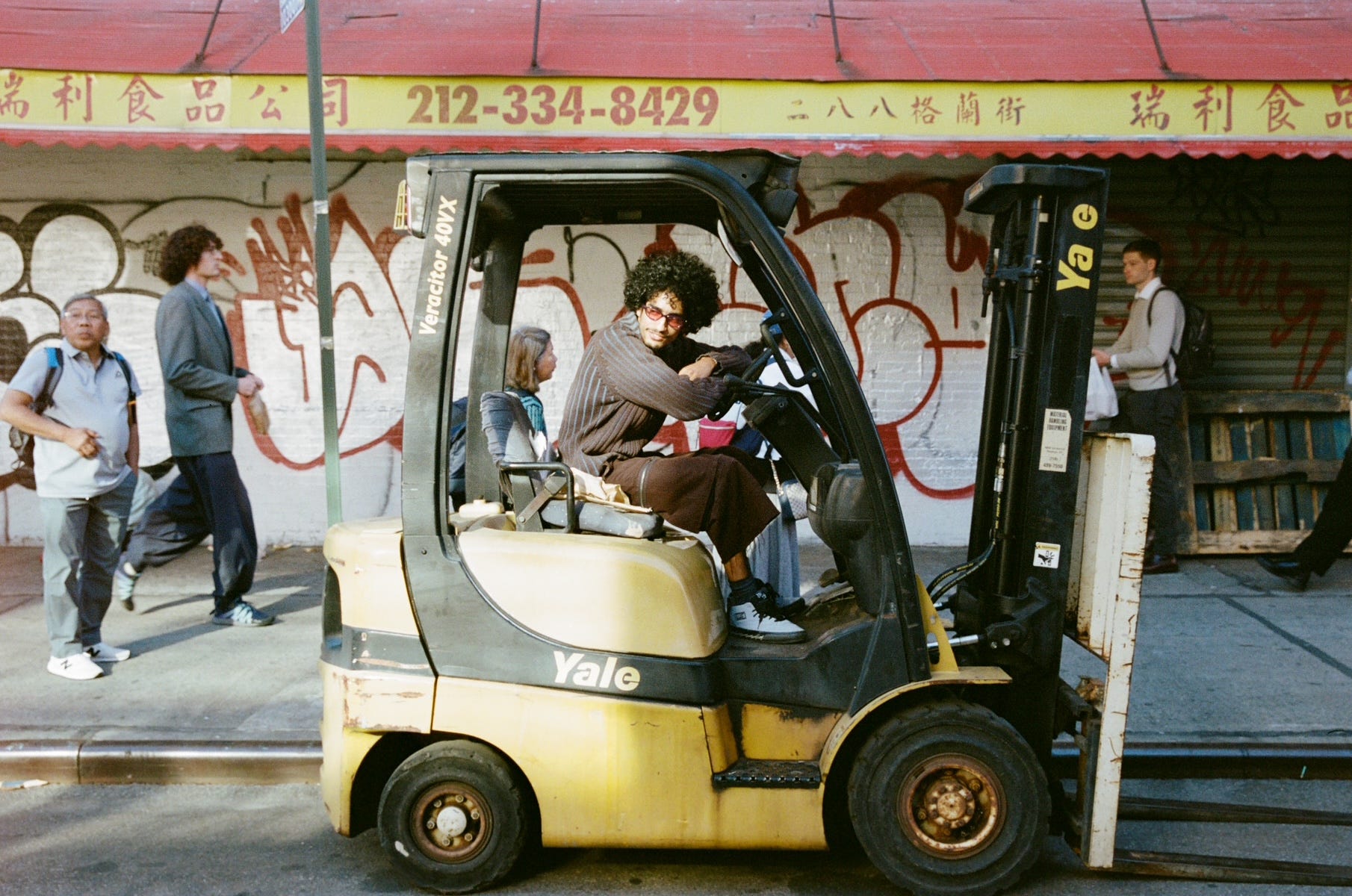
Emmanuel's Modular World
A conversation with the Emmanuel Popoteur, the founder of Goodesign, on rewriting the rules of furniture through a language of modularity and memory.

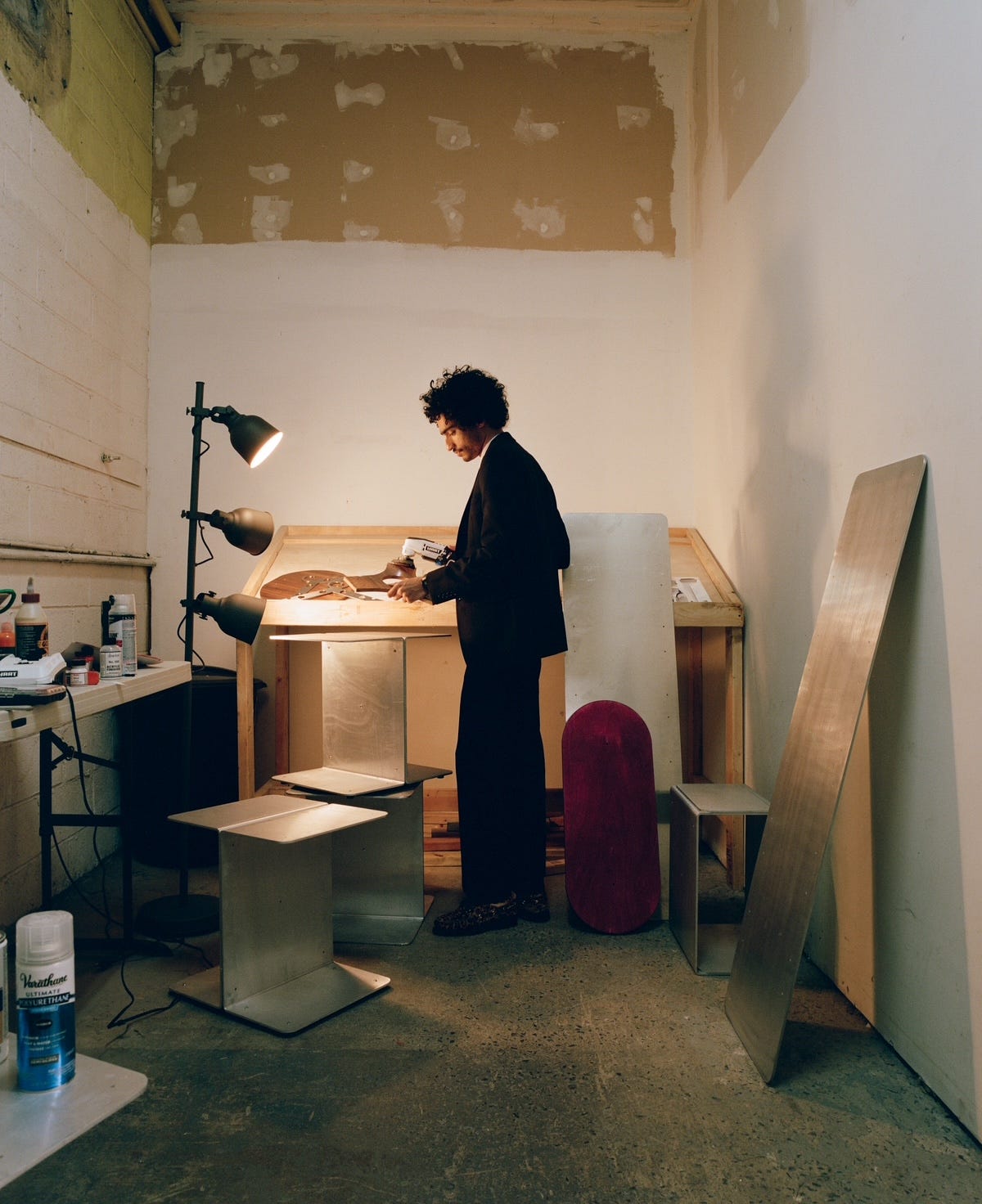
Emmanuel Popoteur is a self taught designer and the founder of Goodesign, a modular furniture studio launched in 2024. There was nothing conventional about Emmanuel’s path into the design world, and there is nothing conventional about how he navigates it today. His instincts and design lens weren’t learned in classroom but instead through his life experiences growing up in NYC that taught him to see space through a lens of utility and adaption. We sat down with Emmanuel at his studio to get a peak into his modular world.
Garms Race: Was design and furniture always part of the plan?
Emmanuel: It’s funny, my mom recently reminded me that when I was four or five, I was already saying I wanted to be an architect. I was the kid ruining my toys by taking them apart, drawing all over them and flipping them into new designs. I’d take apart wagons and turn them into go-karts. I didn’t grow up around traditional fine artists, but creativity was everywhere in my childhood. On the family side, my uncle made furniture in the Dominican Republic. For him, it was a means to an end, but I saw his vision. Growing up with my cousins and brothers in Washington Heights, I saw them always finding creative ways to bring their ideas to life, whether it was through screen printing, painting, or making music. And then just being from the Heights, I was also inspired by like hip hop and and skateboarding culture. Eventually, I picked up a camera, which led to filmmaking and shooting music videos and commercials. So yeah, design wasn’t explicitly a part of the plan but I was always surrounded by a creative energy throughout my life.
Garms Race: You took a fairly non-traditional path into design. How did that shape you?
Emmanuel: I left high school at 16 and eventually went to film school in Jersey, but I realized I didn’t need a traditional institution to execute my ideas. I was working as a freelance videographer to support myself, which actually made my passion for film dwindle because it became just a “day job.” The most rewarding moment was taking an architectural drafting class at a community college. It confirmed that architecture was where I wanted to be, but I wanted to return to it on my own terms where the learning is unattached to the financial pressure of a job. I just want to learn for the sake of learning.

Garms Race: You spent time designing clothing, filmmaking, and making music. What was the catalyst that shifted your focus specifically to furniture design?
Emmanuel: It started with an idea I had. Everyone’s got that one chair in their bedroom, that sort of “hand-me-down” chair that just collects stacks of clothes. I wanted to create a piece that was essentially that chair, stacked with clothes, and the plan was to pour resin over the clothing to harden it into a sculpture. But I didn’t know woodworking so I had to get creative on how to build the frame. I went to Home Depot and saw a PVC cutter and connectors. And realized I could build the frame like real-life Legos. I put it together and the modular PVC skeleton was fire to me. And I pivoted to making that the chair. I posted it, it went viral, and it ended up in a design magazine, which completely shifted my trajectory. That whole project scratched an itch that 2D graphics couldn’t reach.
Garms Race: Is there a specific memory from growing up where you realized that design was your calling?
Emmanuel: Definitely. When I was 17, I took over my older brother’s room. I was dealing with typical teenage angst at the time. Over time, I realized I needed to change the physical space I was in to help me get out of that mental space. I spent three weeks completely redesigning that space. I was painting walls, using Photoshop to create architectural floor plans, and placing pre-measured furniture. I was moving with a lot of intention through the whole process and I spent days obsessing over subtleties like the different tints of white. It was through that project that I realized how powerful it could be to transform a space with good, informed design choices. And how the transformation of a space actually transformed my mood. That was the moment I understood design has the power to change how you feel.
Garms Race: Do you view yourself as a designer or an artist?
Emmanuel: It’s both, but I keep them separate. Design is about parameters, rules, and solving problems. Art comes from a place of “creative desperation.” I try to strike a balance between creative structure and authentic personality. I want my work to be mature, intentional furniture. Someone once said the ultimate goal is to be forgotten, I love that. So many things we interact with are successful because they serve a function and make life better without us having to think about them. If my piece fulfills a need for someone, that’s more than enough.
Garms Race: What does your creative process look like right now?
Emmanuel: It’s very mental. I have a “mental mood board” constantly running and growing. From books to music to my friends, I’m always adding new inspiration to it. I also used to think I had to do everything myself, from the first sketch to the final build. But lately, looking at designers like Marc Newson, I’ve realized you kind of have to build an ecosystem around you of people that you work with where you’re each contributing your own expertise into a shared vision. So now I work with 3D designers, architects, and other people across the field to help articulate my visions. I can hand sketch an idea and work with people to turn it into reality. Freestyling ideas with a team helps me get past imposter syndrome and execute these ideas at a higher level.
Garms Race: If you had to pick a favorite personal piece you’ve created, what would it be?
Emmanuel: The Beam Stool. It wasn’t my first piece, but it’s the one that resonates with me most. It’s the piece that made me want to start a modular furniture company because it encapsulated exactly what Goodesign should be.
Garms Race: What is the deeper ethos behind the name “Goodesign”?
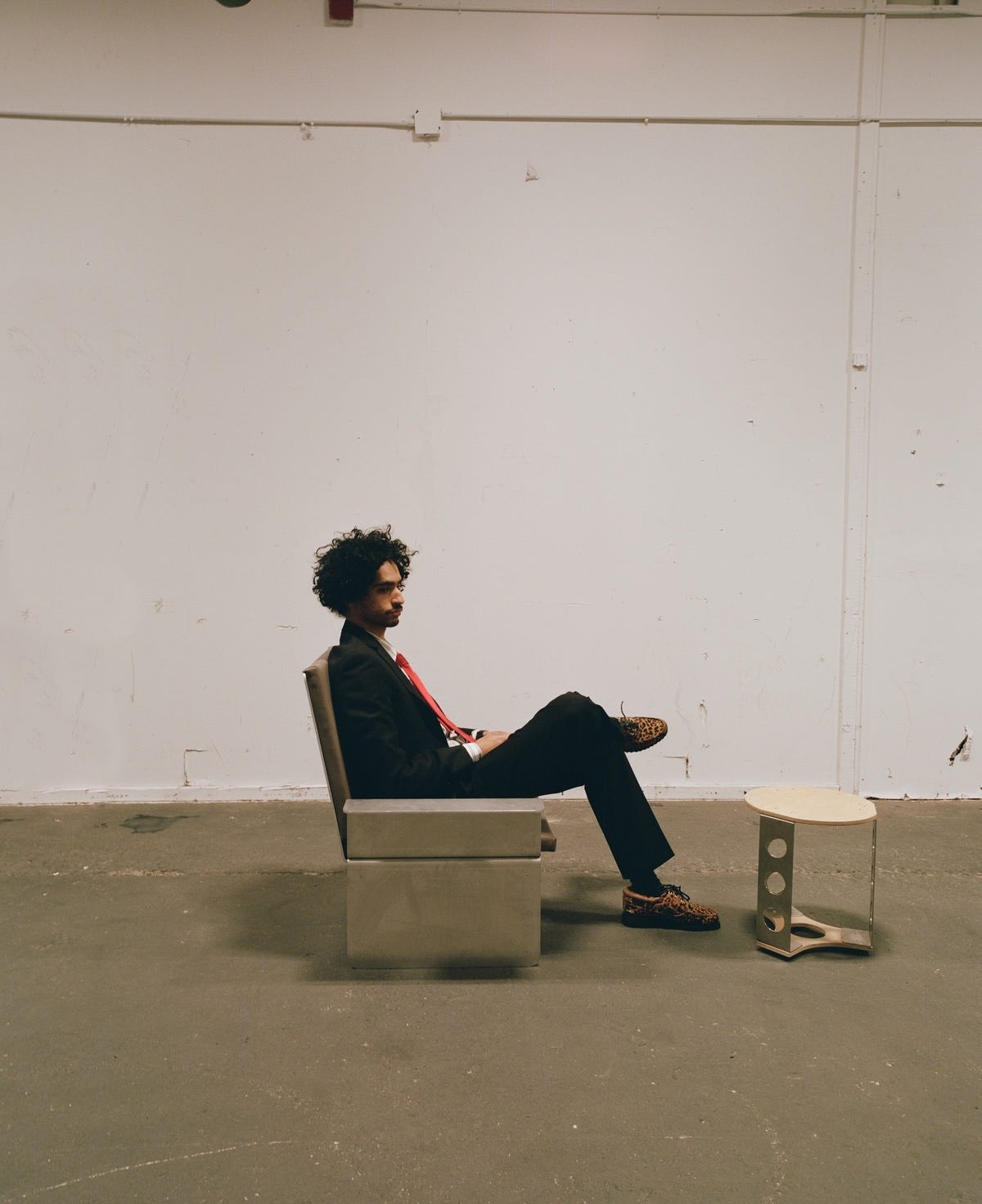
Emmanuel: It’s built on four pillars: Modularity (things that can be rearranged), Adaptability (fitting different environments), Growth (allowing the piece to evolve with the user), and Emotional Attachment (the bond between owner and object). I’m essentially designing in my own language.
Garms Race: What is your long-term vision for the brand?
Emmanuel: I want to move toward “world-building.” Today you can catch Goodesign pieces on my online store, or see my installations at events like what I did last year at Milan Design Week. But in the near future, the goal for me really is a permanent physical space. A place for people to commune and connect, and appreciate and interact with design in real life. Long long term, I’d love to be able to extend that experience further, and enter the hospitality space where I can intentionally design every micro-experience. Eventually, I want to scale from modular furniture to modular homes that consciously solve spatial problems for the people living in them.
Garms Race: You have a unique sense of personal style. How does your creative process extend into your day-to-day fashion?
Emmanuel: My design principles have definitely influenced my wardrobe. I’ve become incredibly particular about materials, no plastic, no polyester. It’s all cotton and linen now. I pay a lot of attention to textures. I’ve also become more experimental. When I was younger, I felt the pressure to fit in, but now I relate more to my birthday twin, André 3000. Like him, I’m not “performing” for anyone. I’m just me.
Garms Race: Which brands resonated with you while you were growing up in New York?
Emmanuel: Growing up, I was into the staples of NYC fashion before they became part of the current trend cycle, like Supreme, Nike SBs, North Face, Timbs, all that. That was the foundation of my style.
Garms Race: How has your approach to fashion evolved as you’ve gotten older?
Emmanuel: It’s no longer about the brand name, it’s about fit, composition, and completeness. I might be wearing teal-tinted grey Carhartts, but the focus is on what’s happening in my head rather than the label on the clothes. My mom calls my style a “safe combination”. It’s a lot of elements working together, but I’m the only one who knows the passcode.